Island Hopping
Ancient wonders and island paradise
With 6,000 Greek islands and islets, only 227 of the islands are inhabited. These islands are a mecca for tourists, with sun-kissed scenery, a pleasant climate and calm azure waters, and they are dotted with quaint fishing ports and historic villages. Here is just a selection:
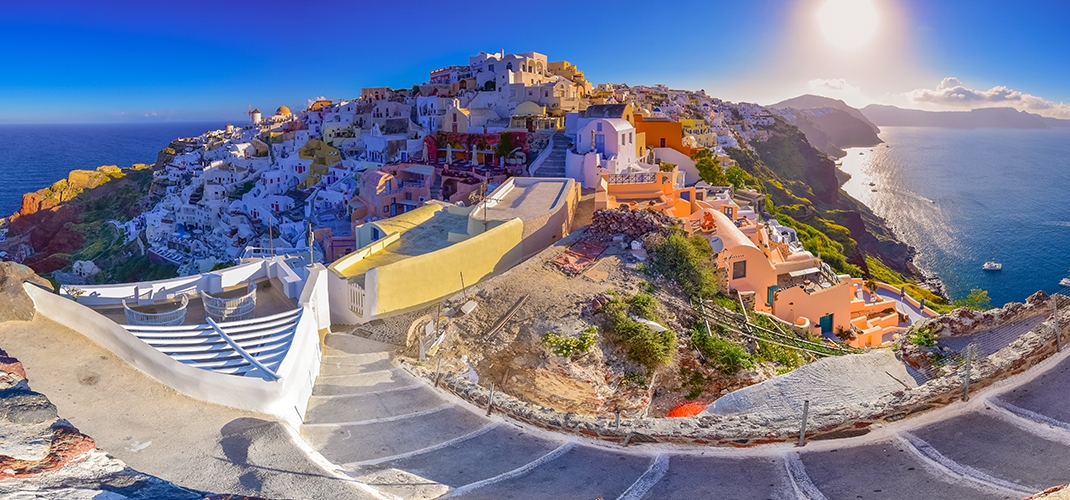
Santorini, known as the island of Thira, is one of the most beautiful places on earth. Firá, the capital, is picture-postcard perfect, covered in traditional whitewashed Cycladic homes and hotels that contrast beautifully with the deep blue seas. At the peak of the island is an enormous volcano, where the island’s dramatic hillsides plunge into the massive caldera. Oia Village is nestled along the rim of the volcano’s basin and is known for its beautiful sunsets, and it is a favourite amongst honeymooners due to its sublime views over the caldera. Imerovigli Village, close to Firá, is a sleepy village with blue-shuttered white houses trimmed in bougainvillea. Then there is Kamari Beach, with its volcanic black-sand shores and gentle waves, and Ammoúdi, nestled below red volcanic rock cliffs in a sheltered bay, where many fishing boats are moored.
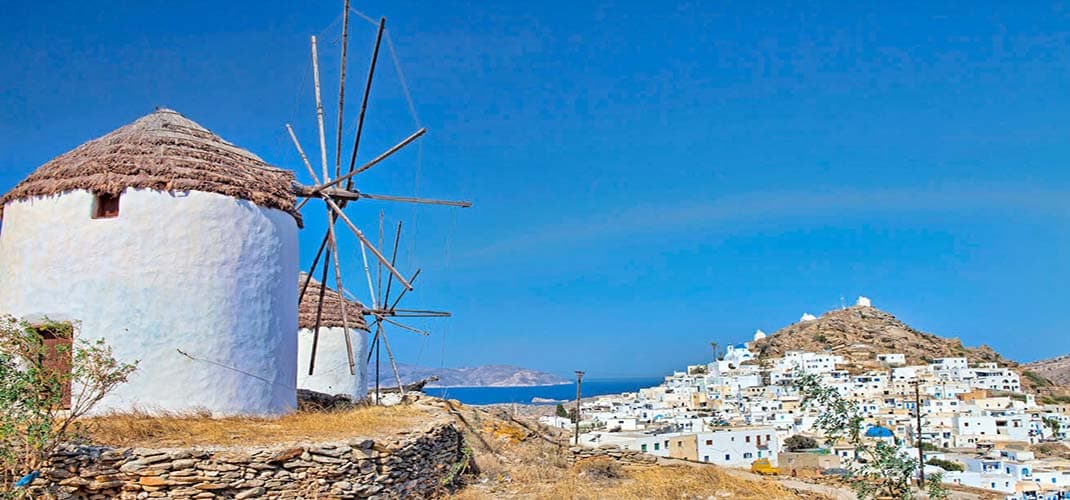
Mykonos is known as the party island, popular with fun-loving sun worshippers who come to laze on the beaches during the summer months, as well as for its many trendy restaurants, tavernas and live entertainment venues. Stroll through Chora Mykonos, the historic town, where you will find a labyrinth of winding stone-paved streets of blue-shuttered whitewashed houses, old churches and narrow, brightly coloured alleyways lined with fuchsia bougainvillea. On the hillside overlooking Mykonos Town stand the emblematic windmills, a favourite spot for photo opportunities.
Crete has a rich heritage, as revealed in the monuments of Chania’s attractive Old Town, including its Byzantine ramparts, the Venetian Harbour, Turkish hammams and an Ottoman-era mosque. Heraklion is a modern metropolis with many attractions, including the Archaeological Museum, which displays fine examples of Minoan art, and the Historical Museum of Crete. Close to Heraklion is the archaeological site of Knossos, Crete’s best-preserved Minoan palace, dating back to 1,900 BCE. Some of the best beaches include Elafonissi, Paleochora and Plakiás, with their amazing pink-sand coastline touched by turquoise waters. Samaria Gorge, which spans 16 kilometres, is for the nature lovers.
Rhodes will impress, as it combines both cultural tours and time at the beach. In the UNESCO-listed Old Town, you can trace the footsteps of the Knights of Saint John, and within the Old Town’s immense fortifications is a labyrinth of pedestrian alleyways and squares. One of Rhodes Town’s main sights is the Palace of the Grand Masters in the Old Town. Lindos is where to go for a relaxing seaside stay; it is full of charm, with whitewashed houses and cobblestone streets. From Rhodes, you can island hop to Symi, just an hour away by ferry.
Corfu is an island of rugged natural beauty, rolling green hills, steep limestone peaks and excellent sandy beaches. The well-preserved Corfu Town is a UNESCO World Heritage Site with many historic buildings from the era of Venetian rule. Wandering around the cobblestone streets of Corfu Town will lead you on a discovery of Renaissance palaces, Baroque churches and Neoclassical villas, as well as restaurants and shops.
Naxos is a colourful seaport with whitewashed cubic houses, Venetian mansions, Catholic churches and an imposing 13th-century Kastro Fortress, which houses the Byzantine Museum. Fabulous sandy beaches are found just outside Naxos Town, but for an off-the-beaten-track experience, travel to the rural villages built along Naxos’ mountainsides. Apeiranthos is a beautiful little town on Mount Fanari, and from its hillside vantage point, you can admire extensive views over Naxos. Filoti Village sits amid olive groves on the slopes of Mount Zas, with a leafy main square, outdoor cafés and bougainvillea-lined alleyways.
Samos is the mythical birthplace of the goddess Hera. The island’s temple, the UNESCO-listed Heraion, is dedicated to Hera and was built around 570 BCE, and it is one of the most important sanctuaries of the ancient world. Amongst the many sights on Samos is the 6th-century BC Aqueduct of Eupalinos in Pythagoreion, a UNESCO World Heritage Site. Covered with pristine woodlands, this lush island offers natural wonders as well as Kokkari Village, the island’s capital. This resort destination features a traditional fishing port, gorgeous beaches, especially around Marathokampos, and an idyllic natural environment of pine forests and olive groves.
Patmos is known as the ‘Holy Island’, as it is believed that Saint John was exiled here by the Roman emperor Domitian. The island has two UNESCO World Heritage-listed sites: the Cave of the Apocalypse and the Monastery of Saint John the Theologian. According to legend, the Cave of the Apocalypse is where Saint John heard the voice of God and wrote the Book of Revelation in 95 CE. The 11th-century Monastery of Saint John the Theologian resembles a fortified castle, with its imposing, crenellated defensive walls and towers. Patmos is ideal for beachside relaxation, nature walks and hiking.
Paros has golden-sand beaches and charming towns. Parikía, the capital, is an atmospheric seaport with whitewashed cubic houses, old Venetian mansions and one of Greece’s best-preserved Paleo-Christian churches, the Monastery of Panagia Ekatontapiliani. Náoussa is an authentic fishing village with a vibrant harbour, cobblestone streets and whitewashed houses. In the medieval hilltop village of Márpissa, you can visit the 17th-century Monastery of Agios Antonios. A short ferry ride from Paros is the smaller island of Antiparos, with its idyllic sandy beaches, whitewashed villages and bougainvillea-adorned houses.
Lefkada is an unspoilt paradise in the Ionian Sea. This rural island has tranquil seaside villages, such as Vassiliki and Agios Nikitas, with many traditional Greek tavernas. Porto Katsiki, with its breathtaking golden sand, is considered one of the best beaches in all of Europe. Egremni Beach is the longest beach on Lefkáda and is renowned for its deep turquoise-blue waters.
Hydra is a car-free island offering a glimpse into traditional Greek island life. On arrival at the harbour, the only ways to get around are on foot or by donkey. Above the port is a 17th-century monastery housing the Ecclesiastical Museum, which displays Byzantine relics, icons and manuscripts. Hydra Town is renowned for its boutiques selling jewellery crafted by local artisans.
Kefalonia is just a short ferry ride away from Ithaca. Kefaloniá boasts magnificent natural scenery, with forested mountains, including Mount Ainos National Park, and pristine beaches with deep azure waters. Two top sights to visit are the port towns of Argostoli, the capital, and Fiskardo, a sailing and yachting hub. The tiny seaside fishing village of Assos is one of the most peaceful and picturesque spots on the island.
Milos has a distinctive coastline; its beaches have a characteristic yellow, white and red shoreline with black pebbles, and the water is cherished for its sapphire and turquoise colours. The port town of Adamas and the fishing village of Pollonia have a romantic ambience. Sarakiniko Beach has the most surreal scenery, with a shore of white volcanic rock. The prettiest village is Pláka, with whitewashed houses lining a maze of narrow streets.
April–June and September–October
Start Planning Today
Our travel specialists are ready to design the perfect itinerary for you: whether it's your first time or your fifteenth.
Mon–Fri 09:00am–17:00pm AEST · No obligation · Free expert advice
Athens, Santorini, Athens

Athens, Mykonos, Athens
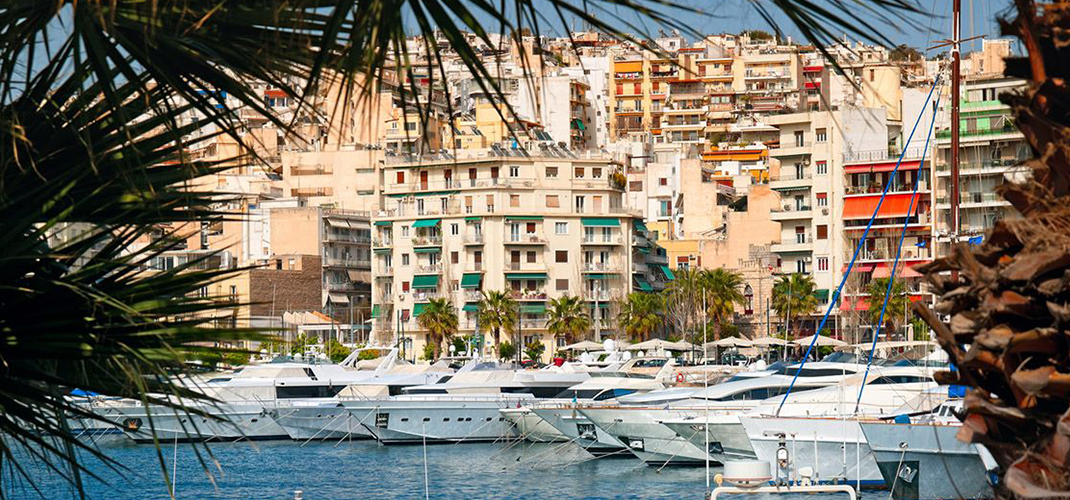
Athens, Paros, Mykonos
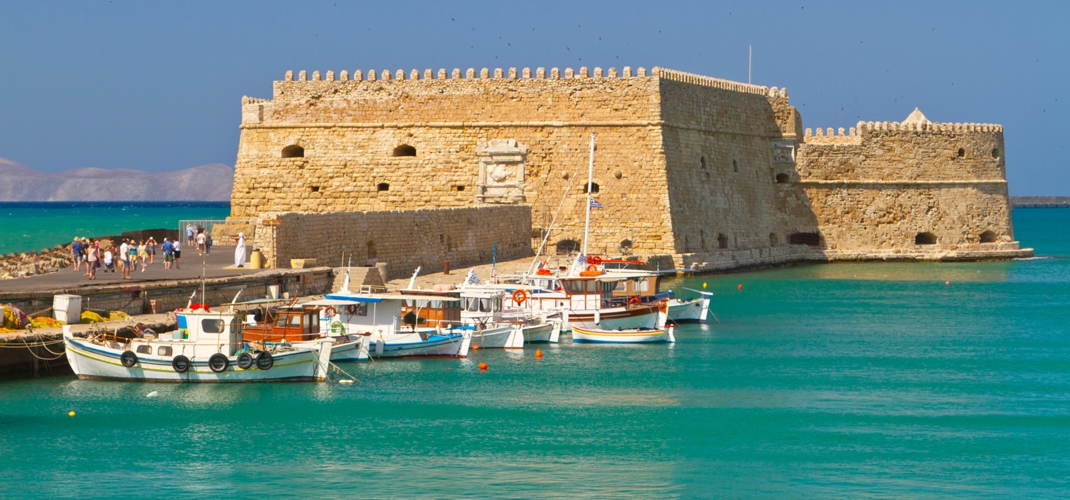
Athens, Paros, Crete

Athens, Santorini, Crete
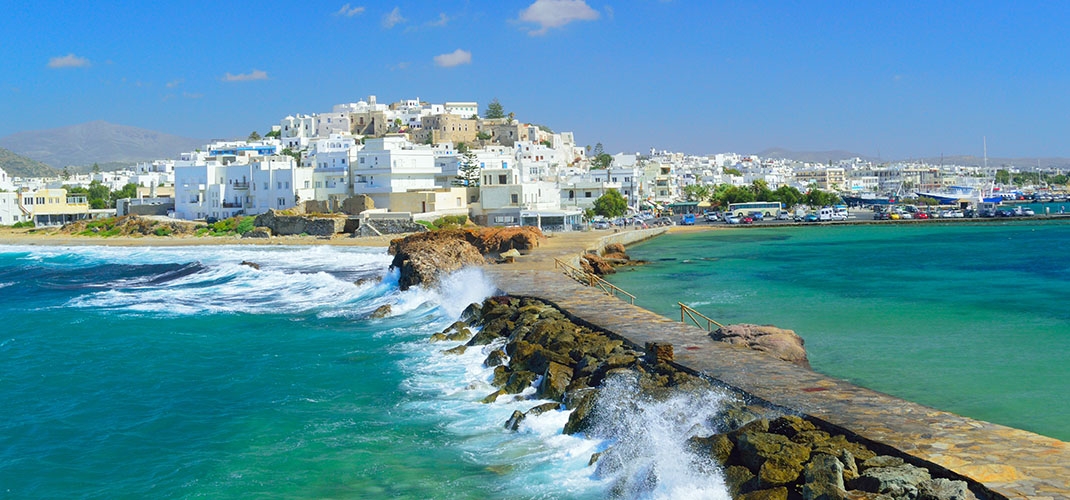
Athens, Santorini, Naxos, Athens
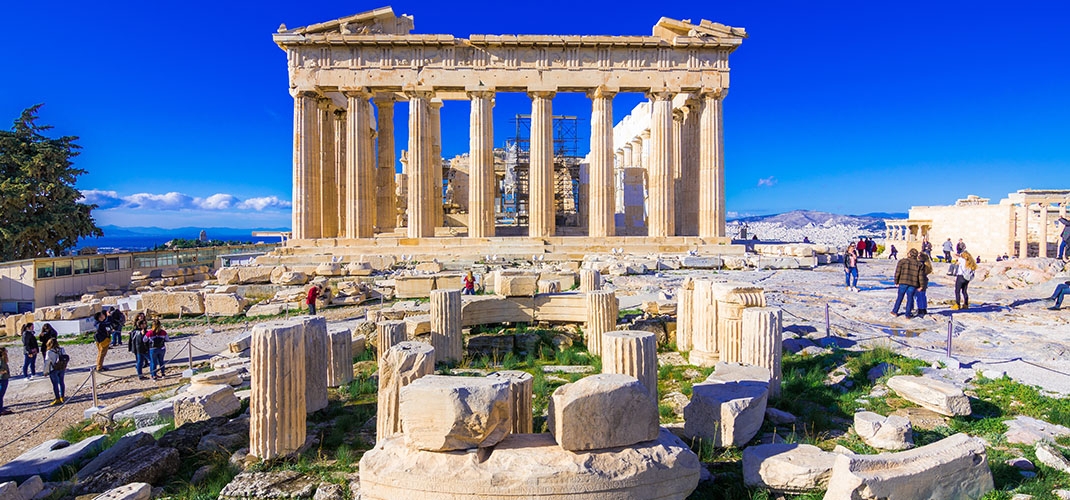
Athens, Santorini, Mykonos, Athens
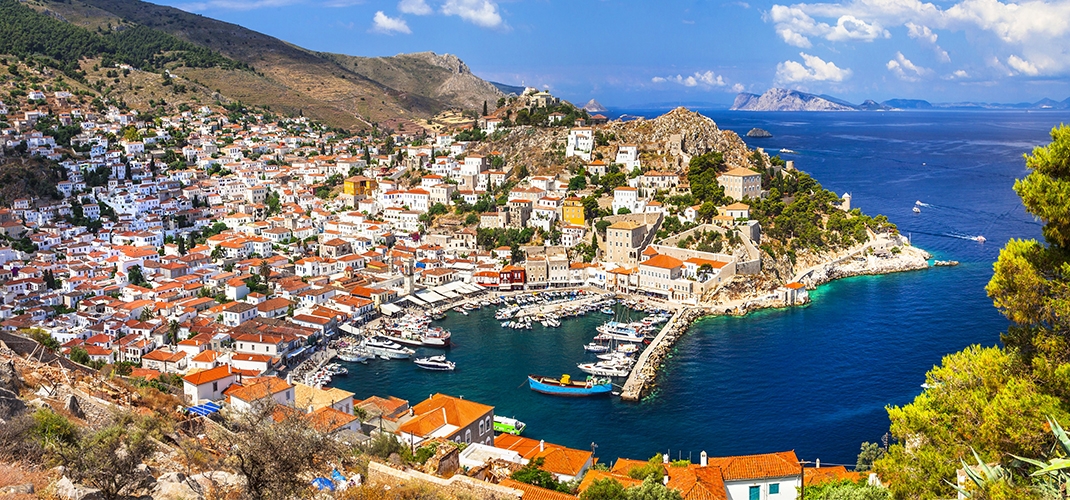
Athens, Hydra, Spetses, Athens

Athens, Mykonos, Santorini, Crete
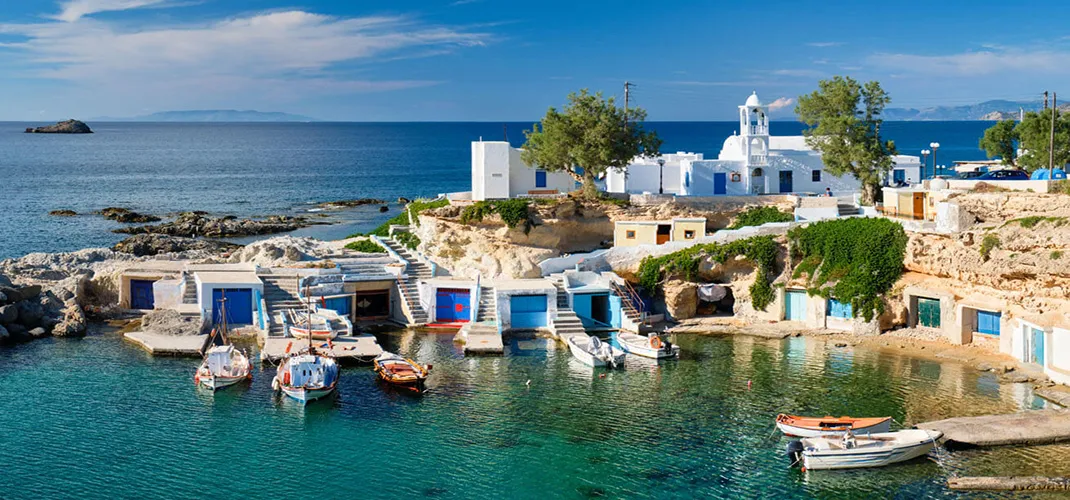
Athens, Santorini, Milos, Athens